Showing posts with label veterinary. Show all posts

Wednesday, September 16, 2015

Time to Clean Your Pet's Ears?

Veterinarians see a lot of patients with ear infections. In fact, it's the second most common reason for a client visit, according to pet health insurer, VPI Pet Insurance. With ear problems prompting so many trips to the vet, should ear cleaning be a necessary part of grooming your pet?

Generally, cleaning a dog's ears on a routine basis is not necessary, according to Leonard Jonas, DVM, MS, DACVIM, a veterinarian with Wheat Ridge Animal Hospital in Wheat Ridge, Colo. That's because animals have a naturally occurring self-cleansing process.

"I've had pets my whole life," Jonas said. "I don't remember ever routinely cleaning out their ears."
However, that doesn't mean pet owners should never take notice of their dog's ears. Certain breeds, lifestyles and physical characteristics will make a dog more prone to what Jonas calls "abnormal situations," in which the pet's normal homeostasis is disrupted. This is when something, either systemically or locally in the ear, interferes with the normal surface barrier defense system and the normal cleaning process that keeps bacteria and yeast under control.

There are signs to watch for if your pet is having an issue with its ears. These, according to Jonas, include:
  • Shaking its head
  • Flapping its ears
  • Rubbing at its ears, either with a paw or by rubbing against furniture or carpet
  • Self-massaging the ear to ease itch, pain or irritation
  • Debris and/or redness inside the ear
  • Sores inside the ear
  • Odor in the ear due to abnormal oils and bacteria
"If you [the pet owner] look in the ear, you can see sometimes a lot of debris," said Jonas, explaining what an ear with an infection or problem may look like. "Then [you] see redness on the ear flaps (inside) or sores developing. And then there's also odor that occurs when you have an abnormal ear."

Breeds to watch
There are certain breeds of dogs—such as Shar Peis, bulldogs and poodles—that have narrow ear canals and have a higher chance of incurring ear issues. Poodles, especially, have more hair in the canals, Jonas explained. "The hair itself is not a problem, but if they've got something abnormal with their whole defense system, all that extra hair in there makes it difficult."
Cocker spaniels are notorious for ear problems, Jonas added.

When to clean your pet's ears
According to Jonas, it's best to consult your veterinarian before going forward with an ear-cleaning regimen. Unlike cleaning the teeth, cleaning the ears does not need be done regularly. If a pet owner suspects that something may be wrong with the ear, it's advised to visit the veterinarian and establish whether the dog's ear needs to be cleaned by the owner either routinely or for an instructed period of time.

Cleaning the dog's ears without first seeing a veterinarian is not a good idea, Jonas said, "because you don't know what's going on inside. You don't know if there has been a ruptured ear drum; you don't know if there's a stick or a stone or something stuck down inside the ear that needs to be fished out by a veterinarian."

A veterinarian can diagnose the problem and make the proper recommendations, which may be cleaning and/or medication.

Typically, there are two situations for which a dog's ears would need to be cleaned regularly. The first is when a veterinarian instructs for it to be done, and the second is when the dog is frequently in water. "Water in their ears disrupts the normal defense barrier system in that ear, and can make them prone to getting infections and irritation and inflammation," Jonas said.

If there needs to be ear cleaning
A veterinarian should show the owner how to properly clean the dog's ears because "there are a lot of different techniques, and it depends on what the problem is," Jonas advised.

There are a couple of precautions to always remember, according to Jonas. First, never use a Q-tip, because it tends to push the wax and debris further into the ear. Second, be sure a groomer does not pluck the hair out of the dog's ears, unless that hair is contributing to an ear problem; Jonas believes that doing so may cause irritation.

One thing pet owners should also consider is that if the dog has an ear infection, it could be very painful for them. Forcing the dog to get its ears cleaned or putting medication in them can be a dangerous situation for the owner and the dog.

"If your pet doesn't want you to do it, don't, because it hurts," Jonas said. "You're just going to create a problem, and you need to look to alternatives."


Originally published by Healthy Pet.

Friday, June 12, 2015

Hot Weather Tips


"Most people love to spend the warmer days enjoying the outdoors with friends and family, but it is important to remember that some activities can be dangerous for our pets," said Dr. Camille DeClementi, Senior Toxicologist at the ASPCA's Animal Poison Control Center. "By following a few simple rules, it is easy to keep your pet safe while still having fun in the sun."
Take these simple precautions, provided by ASPCA experts, to help prevent your pet from overheating. And if you suspect your pet is suffering from heat stroke, get help from your veterinarian immediately. 

Visit the Vet 
A visit to the veterinarian for a spring or early summer check-up is a must. Make sure your pets get tested for heartworm if they aren't on year-round preventive medication. Do parasites bug your animal companions? Ask your doctor to recommend a safe flea and tick control program. 

Made in the Shade
Pets can get dehydrated quickly, so give them plenty of fresh, clean water when it's hot outdoors. Make sure your pets have a shady place to get out of the sun, be careful to not over-exercise them, and keep them indoors when it's extremely hot. 

Know the Warning Signs 
Symptoms of overheating in pets include excessive panting or difficulty breathing, increased heart and respiratory rate, drooling, mild weakness, stupor or even collapse. They can also include seizures, bloody diarrhea and vomit along with an elevated body temperature of over 104 degrees. Animals with flat faces, like Pugs and Persian cats, are more susceptible to heat stroke since they cannot pant as effectively. These pets, along with the elderly, the overweight, and those with heart or lung diseases, should be kept cool in air-conditioned rooms as much as possible. 

No Parking!
Never leave your animals alone in a parked vehicle. "On a hot day, a parked car can become a furnace in no time-even with the windows open-which could lead to fatal heat stroke," says Dr. Louise Murray, Vice President of ASPCA Bergh Memorial Animal Hospital. Also, leaving pets unattended in cars in extreme weather is illegal in several states. 

Make a Safe Splash
Do not leave pets unsupervised around a pool-not all dogs are good swimmers. Introduce your pets to water gradually and make sure they wear flotation devices when on boats. Rinse your dog off after swimming to remove chlorine or salt from his fur, and try to keep your dog from drinking pool water, which contains chlorine and other chemicals that could cause stomach upset. 

Screen Test 
"During warmer months, the ASPCA sees an increase in injured animals as a result of High-Rise Syndrome, which occurs when pets-mostly cats-fall out of windows or doors and are seriously or fatally injured," says Dr. Murray. "Pet owners need to know that this is completely preventable if they take simple precautions." Keep all unscreened windows or doors in your home closed and make sure adjustable screens are tightly secured. 

Summer Style
Feel free to trim longer hair on your dog, but never shave your dog: The layers of dogs' coats protect them from overheating and sunburn. Brushing cats more often than usual can prevent problems caused by excessive heat. And be sure that any sunscreen or insect repellent product you use on your pets is labeled specifically for use on animals.
Street Smarts 
When the temperature is very high, don't let your dog linger on hot asphalt. Being so close the ground, your pooch's body can heat up quickly, and sensitive paw pads can burn. Keep walks during these times to a minimum. 

Avoid Chemicals 
Commonly used flea and tick products, rodenticides (mouse and rat baits), and lawn and garden insecticides can be harmful to cats and dogs if ingested, so keep them out of reach. When walking your dog, steer clear of areas that you suspect have been sprayed with insecticides or other chemicals. Keep citronella candles, oil products and insect coils out of pets' reach as well. Call your veterinarian or the ASPCA Animal Poison Control Center at (888) 426-4435 if you suspect your animal has ingested a poisonous substance. 

Party Animals
Taking Fido to a backyard barbeque or party? Remember that the food and drink offered to guests may be poisonous to pets. Keep alcoholic beverages away from pets, as they can cause intoxication, depression and comas. Similarly, remember that the snacks enjoyed by your human friends should not be a treat for your pet; any change of diet, even for one meal, may give your dog or cat severe digestive ailments. Avoid raisins, grapes, onions, chocolate and products with the sweetener xylitol.

Fireworks Aren't Very Pet-riotic
Please leave pets at home when you head out to Fourth of July celebrations, and never use fireworks around pets. Exposure to lit fireworks can potentially result in severe burns or trauma to curious pets, and even unused fireworks can be hazardous. Many types of fireworks contain potentially toxic substances such as potassium nitrate, copper, chlorates, arsenic and other heavy metals.


Article originally published by the ASPCA.

Thursday, January 22, 2015

Protect Your Pet During Winter and Cold Weather


Keep pets indoors and warm 
The best prescription for winter's woes is to keep your dog or cat inside with you and your family. The happiest dogs are those who are taken out frequently for walks and exercise but kept inside the rest of the time. 

Don't leave pets outdoors when the temperature drops. 
During walks, short-haired dogs may feel more comfortable wearing a sweater. No matter what the temperature is, windchill can threaten a pet's life. Pets are sensitive to severe cold and are at risk for frostbite and hypothermia during extreme cold snaps. Exposed skin on noses, ears and paw pads can quickly freeze and suffer permanent damage. 

Take precautions if your pet spends a lot of time outside
A dog or cat is happiest and healthiest when kept indoors. If for some reason your dog is outdoors much of the day, he or she must be protected by a dry, draft-free shelter that is large enough to allow the dog to sit and lie down comfortably but small enough to hold in his/her body heat. The floor should be raised a few inches off the ground and covered with cedar shavings or straw. The doorway should be covered with waterproof burlap or heavy plastic. 

Help neighborhood outdoor cats 
If there are outdoor cats, either owned pets or community cats (ferals, who are scared of people, and strays, who are lost or abandoned pets) in your area, remember that they need protection from the elements as well as food and water. It's easy to give them a hand. 

Give your pets plenty of food and water 
Pets who spend a lot of time outdoors need more food in the winter because keeping warm depletes energy. Routinely check your pet's water dish to make certain the water is fresh and unfrozen. Use plastic food and water bowls; when the temperature is low, your pet's tongue can stick and freeze to metal. 

Be careful with cats, wildlife and cars 
Warm engines in parked cars attract cats and small wildlife, who may crawl up under the hood. To avoid injuring any hidden animals, bang on your car's hood to scare them away before starting your engine. 

Protect paws from salt 
The salt and other chemicals used to melt snow and ice can irritate the pads of your pet's feet. Wipe all paws with a damp towel before your pet licks them and irritates his/her mouth. 

Avoid antifreeze poisoning 
Antifreeze is a deadly poison, but it has a sweet taste that may attract animals and children. Wipe up spills and keep antifreeze (and all household chemicals) out of reach. Coolants and antifreeze made with propylene glycol are less toxic to pets, wildlife and family. 

Speak out if you see a pet left in the cold 
If you encounter a pet left in the cold, document what you see: the date, time, exact location and type of animal, plus as many details as possible. Video and photographic documentation (even a cell phone photo) will help bolster your case. Then contact your local animal control agency or county sheriff's office and present your evidence. Take detailed notes regarding whom you speak with and when. Respectfully follow up in a few days if the situation has not been remedied. 


 SOURCE: http://www.humanesociety.org/animals/resources/tips/protect_pets_winter.html 


Monday, November 24, 2014

Thanksgiving Safety Tips for Pets

Thanksgiving is just around the corner, and it’s a great occasion to have your family join you in the kitchen for a fun day of food prep. When the enticing aromas of food start wafting through your house, it’s likely that your pets will want to get in on the action. However, the hectic environment in the kitchen on this food-filled holiday poses some potential health risks for your pets. Remember these safety tips as you whip up the perfect batch of mashed potatoes and gravy:


Let’s talk turkey: If you decide to give your pet a nibble of your Thanksgiving turkey, make sure it’s boneless and well-cooked—no raw or undercooked turkey, which may contain salmonella bacteria.

Sage advice: While sage can be a delicious addition to your Thanksgiving stuffing, it and many other herbs contain essential oils and resins that can cause gastrointestinal upset and central nervous system depression in pets. Cats are especially sensitive.

Doughy dangers: When an animal ingests raw bread dough, his body heat causes the dough to rise in his stomach. Ouch! This may cause vomiting, severe abdominal pain and bloating, which could become a life-threatening emergency. Cake batters made with raw eggs are also dangerous to pets.

Portion control, please: While it’s ok to share a bit of well-cooked turkey with your furry friend, it’s best to stick to your pet’s regular diet during the holidays. Allowing your pets to over indulge could cause stomach upset, diarrhea or pancreatitis.


Source: http://www.aspca.org/parents/term/its-turkey-time-check-out-our-thanksgiving-pet-safety-tips

Tuesday, September 9, 2014

Is Your Cat Missing the Litter Box?

You have a problem. Your cat is thinking outside the box, and not in a good way. You may be wondering what you did to inspire so much “creative expression.” Is your cat punishing you? Is Fluffy just “bad”? No, and no. House soiling and missing the litter box is a sign that your cat needs some help.

 According to the Winn Feline Foundation, house soiling is the number one complaint among cat owners. The good news is that it is very treatable.

 An accredited veterinarian can help you determine if the problem is medical or related to social or environmental stressors. In addition to a complete physical exam, the doctor will ask you specific “where and when” questions.


 Health factors 

Tony Buffington, DVM, PhD, a specialist in feline urinary disorders at The Ohio State University, and founder of the Indoor Cat Initiative says that many veterinarians recommend a urine test for every cat with a house soiling problem. The urinalysis will determine if blood, bacteria, or urinary crystals are present — signs that your cat might have feline lower urinary tract disease (FLUTD).

 FLUTD is very common and can cause painful urination. Cats that begin to associate the litter box with pain will avoid it. Other medical possibilities include hyperthyroidism, kidney disease, diabetes, and arthritis and muscle or nerve disorders that might prevent your cat from getting to the litter box in time.

 Environmental factors

If there is no medical cause, the next step is to look at environmental factors. Start with the litter box. Your cat might be avoiding the litter box because it is not cleaned well enough, you've changed the type of litter you use, or there is only one box for multiple cats.

 Another possibility is that your cat is “marking” — spraying urine, typically on vertical objects such as walls and furniture, or in “socially significant” areas near doors or windows. Both male and female cats mark. The most common offenders are cats that have not been spayed or neutered.* Buffington says that stress can cause elimination problems too. For example, subtle aggression or harassment by other house cats or neighborhood cats may be an issue.

 Indoor Cat Initiative

Even unremarkable changes in your home can make your cat anxious or fearful. Look around. Did anything change right before your cat started having problems? Did you get a new pet? A new couch? Maybe you just moved the old couch to a different part of the room, or had a dinner party. Cats are sensitive creatures and changes that seem small to you can throw your cat off his game. Check with your veterinarian about finding solutions that work for both you and your cat.

Source: http://www.aaha.org/pet_owner/pet_health_library/cat_care/behavior/missing_the_litter_box.aspx

Thursday, August 14, 2014

Back to School Separation Anxiety

With all the excitement of the kids going back to school, many families may not think about what it means to the dog or cat. What you may notice are changes in behavior, a sad dog or cat, who mopes around or sleeps a lot more. Or your dog may suddenly started chewing things he shouldn't, or your cat does a lot more meowing. And you may not even connect the unusual cat or dog behavior with back-to-school time. Dogs and cats love routine, it makes them feel secure. They like knowing that certain things happen at about the same time each day, and they know where they want to be when it happens. If the kids have been around all summer, playing outside with the dog, or giving kitty extra love and snuggles, and suddenly they’re gone all day, it's upsetting. For some pets, they just feel sad and confused, and others feel real separation anxiety and may act up. 


 Kids can help your pet through the back-to-school blues The first thing to note is that this is a family matter, and a good opportunity for the kids to take more responsibility for the care of their pets. Let your kids know that their dog or cat is going to miss them when they're gone all day, and discuss what they can do to help their pets through it. One of the best ways for a pet to get over the loss of one routine is to replace it with another. Your pet may be sad all day at first, but if he knows that at 3:45 your kids will be home from school and will actively play with him soon after each day, your pet has something new to look forward to. If your child has a set time to do homework or read, that's an excellent time for the dog or cat to curl up next to her and "help" with studying. Ask your kids to think of other ways to include their pets in their routines. 


More than just sad, it’s separation anxiety If your pet exhibits true separation anxiety, as in, he goes crazy when he sees your kids put on their backpacks to leave for school, or is destructive when everyone is gone, you'll have to do some gentle training to ease his stress. Your kids may feel sorry for their pet and do a long sad goodbye. This only reinforces your pet’s fears and builds up the anxiety. It’s better to make the goodbye upbeat and brief, or eliminate it completely. Depending on your pet, he may respond well to a goodbye petting, a little goodbye treat, or simply leaving with a cheerful "good boy!" as your kids go out the door. This should happen before your pet gets upset. If your pet is freaking out, absolutely do not reward with anything. If you can't get your pet to calm down if it’s a dog, a simple "sit!" command may help. Then reward with petting and telling him he's ok once he’s calm. If your pet gets upset just by the backpacks or car keys being picked up, pick those items up and walk around the house with them several times a day, but don't leave. Your pet will learn not to associate those items with the pending doom of your kids leaving.


When back-to-school means an empty house If everyone is gone all day, both parents included, your pets are going to be bored on top of being upset. It's important to leave them some interactive toys to help them pass the time. Eventually, they will get used to the new reality, and will likely sleep most of the day. You can balance the boredom by providing vigorous exercise each day when you or your kids are home. Remember, you and your kids may have had a very busy day, but your pet has done virtually nothing, unless there is evidence to the contrary, as in a shredded or chewed up sofa. Providing your dog or cat active, vigorous play each day will help them burn up their pent up energy. Take your dog for a run or go outside and throw a ball or flying disk. For your cat, run around the house with a little toy on the end of a string. You may also want to consider getting your pet a little buddy to keep him company when no one is home. Even an aloof adult cat is likely to accept a kitten into her life, and the kitten will entice the older cat to play. And dogs, being true social animals, nearly always accept another dog to play with. Remember, your pets can get nervous, upset, anxious or lonely just like people, only they don't have the benefit of knowing that you’ll be back when you leave. It's up to you and your kids to make your pets feel secure in ways they understand. 

Source: http://www.petcentric.com/08-24-2009/your-pets-view-of-kids-going-back-to-school


Tuesday, July 22, 2014

Car Sickness In Pets

Does your dog throw up in the car when you go for rides? He may be experiencing typical motion sickness, just like some people do. Motion sickness usually begins very shortly after starting the car ride. The dog will begin to drool and then vomit. It’s not serious, but certainly not something that we like to clean up! To solve the problem, first try acclimating the dog to car rides. Do this by simply putting him in the car for a few minutes each day without going anywhere. Then try just going down the driveway and back, and the next day going around the block. Gradually build up the distance and time the dog rides in the car.


 Sometimes this will help to decrease the dog’s anxiety over riding in the car and may help to decrease vomiting. If that doesn't work, there are some over-the-counter medications you can try. The medication will need to be given about an hour before the car ride. Ask your veterinarian for a recommendation as to what drug to try and the dosage for your pet.

 (Never give any medications to your pet without your veterinarian’s advice!) These drugs are safe, with drowsiness usually the only major side effect. But since your dog isn’t driving the car, that shouldn’t be a problem! If over-the-counter drugs don’t work, your veterinarian may be able to suggest another method for curing the car sickness.

 Source:http://www.aaha.org/pet_owner/pet_health_library/dog_care/general_health/car_sickness.aspx

Thursday, February 20, 2014

Love Your Pet Day

The month of February, seems to be all about love, and our pets are no exceptions. Today is Love Your Pet Day!  Give a special treat for your pet or just some extra cuddle time today.  We also share in your love for your pets!

Tuesday, November 5, 2013

Pets and Garbage

If your pet’s nose goes in the trash on a regular basis, be extra careful during the holidays! The trash will be extra interesting when filled with holiday scraps, but it will also be more dangerous. Keep those garbage can lids on tight!

Wednesday, August 14, 2013

Make Sure They Can Get Home: Check Your Pet's Microchip


Is your pet's microchip up-to-date? If your pet were lost, would an animal hospital or shelter be able to contact you once your pet was found?

It's important to get your pet microchipped; but it's just as important to make sure that microchip contains the correct information in order for your four-legged friend to get home.
That's why the American Animal Hospital Association (AAHA) and the American Veterinary Medical Association (AVMA) are teaming up to encourage pet owners to update their pet's microchip information on National Check the Chip Day, Aug. 15.
Almost 9.6 million pets are euthanized every year because their owners can't be found, according to the American Humane Association. While tags and collars are important, microchipping is a valuable method because the microchip won't wear out, tear, slip off or become lost.
How does a microchip work?
The microchip, which is about the size of a grain of rice, is injected by a veterinarian or veterinary technician just beneath your pet's skin in the area between the shoulder blades. This is usually done without anesthesia, and the experience can be compared to getting a vaccination.
Each microchip has a unique registration number that is entered into a database or registry, and is associated with your name and contact information. If your lost dog or cat is found by an animal hospital, shelter or humane society, they will use a microchip scanner to read the number and contact the registry to get your information.
Make sure you can be found, too
While it may be comforting to know the microchip won't get lost or damaged, and that it will probably last the pet's lifetime, the microchip is useless if you're not updating your contact information with the registry. If your pet has been microchipped, keep the documentation paperwork so you can find the contact information for the registry. If you don't have the documentation paperwork, contact the veterinarian or shelter where the chip was implanted.
Keep in mind there are more than a dozen companies that maintain databases of chip ID numbers in the U.S. By using AAHA's Universal Pet Microchip Lookup at petmicrochiplookup.org, you can locate the registry for your chip by entering the microchip ID number. If you don't have your pet's microchip ID number, have a veterinarian scan it and give it to you.
Only about 17% of lost dogs and 2% of lost cats ever find their way back to their owners. Prevent the heartache and ensure your pet has an up-to-date microchip.


Originally published by Healthy Pet.

Monday, July 8, 2013

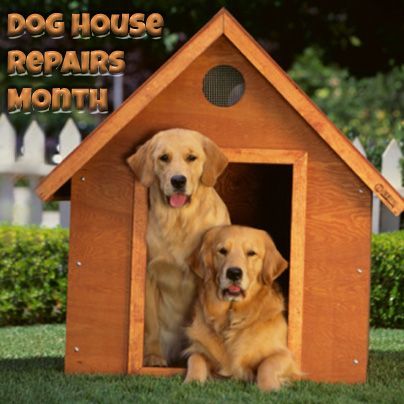
Dog House Repairs Month

Does your dog have his or her own house? It's Dog House Repairs Month! Make sure that it’s in good shape this summer! Check the interior corners for beehives, and make sure to repair leaks and splinters in the wood.

Tuesday, June 4, 2013

Pet Appreciation Week

This week is Pet Appreciation Week, a time set aside for pet owners to show their pets how much they mean to them. Are you doing anything special for your pet this week?


Friday, May 24, 2013

Memorial Day

Happy Memorial Day this Monday! Remember the men and women who dedicated their lives to our nation’s freedom.

Monday, April 8, 2013

April is Prevent Lyme Disease in Dogs Month!

April is Prevent Lyme Disease in Dogs Month! Lyme Disease is a deadly illness passed by ticks. The best way to protect your pet from Lyme disease is to protect them from ticks using a powerful tick preventative. We’ll be happy to make our recommendations to you!

Wednesday, February 13, 2013

Pets a Go Go: Tips for Traveling with Fido and Fluffy


Traveling with your pet can be a rewarding experience, but a successful trip depends on more than packing your pet’s favorite tennis ball or catnip toy.
To ensure the safety and happiness of your pet, start planning early, research transportation and lodging options, and make an appointment with your veterinarian.

Jet Setters

Most major airlines transport animals, but before booking a flight, consider all the factors, including your pet’s size and temperament and possible weather conditions.
Pets that are too large to fit in a pet carrier under your seat must fly as checked baggage in the plane’s cargo section.
Many animals become anxious in unfamiliar environments, particularly when separated from their owners, and can suffer both emotionally and physically during a flight.
Sedation is not considered a safe option.
"An animal’s natural ability to balance and maintain equilibrium is altered under sedation," says Patricia Olson, DVM, of the Morris Animal Foundation. "When the kennel is moved, a sedated animal may not be able to brace and prevent injury.”
Gary L. Rose, DVM, of AAHA-accredited Cabrillo Veterinary Hospital in San Diego, Calif., adds “When heavily sedated, some short-nosed breeds can have trouble breathing.”
Temperature extremes can also put your pet at risk. Many airlines do not transport pets during the hottest months of the year, or will not accept pets when the forecasted temperature is above a certain point.
Look for flights in the early morning or late evening, when temperatures are at their lowest.

On the Road

Of course there are also safety concerns when traveling by car. Pet crates are strongly recommended.
If an accident occurs, pet crates can protect animals from impact injuries and also prevent them from running out into traffic.
Marci Cook, DVM, of AAHA-accredited Shiloh Veterinary Hospital in Billings, Mont., says, “A crate offers a safe environment for your pet and helps them to feel comfortable.”
Rose recommends introducing your pet to the crate over several weeks. “Get them used to it by feeding them in it, and by taking short trips around the neighborhood to see how they do.”
For pets prone to motion sickness, Rose advises, “Make sure there’s adequate ventilation in the car. Keep [it] cool and comfortable. If your pet still shows signs of motion sickness, medication is available through your veterinarian.”

Lodging

Always research accommodations before leaving home, and make reservations whenever possible.
Many hotels and inns allow pets but may have size and weight limits, breed restrictions, or a limit on the number of pets allowed per room.
Campgrounds also have pet policies and occasionally prohibit pets altogether. State and national parks that allow pets often restrict them from certain areas, such as hiking trails and beaches.

Health Certificates

Most airlines require pets be examined by a veterinarian no more than 10 days prior to the date of travel. Be prepared to present health and rabies certificates at the time of departure.
If you are traveling by car, pack a copy of your pet’s prescriptions and vaccination records. Some states require proof of rabies vaccination.
Your veterinarian can also tell you if your pet needs additional vaccinations or preventive medications for the area in which you will be traveling.

Travel Tips and Car Safety

  • Be sure your pet is wearing a flat collar with identification tags at all times.
  • If your pet doesn’t have a microchip, consider having one implanted.
  • Know basic pet first aid, and carry a first aid kit.
  • Never allow your pet to travel with its head outside the car window.
  • Do not allow pets to ride in the front seat. They are at risk of being thrown into the windshield, can interfere with your ability to drive, or could be injured by an airbag.
  • Disable electric window controls. Dogs have have been know to get their heads stuck in windows after stepping on the buttons.
  • Stop for “potty breaks” every two hours.
  • Always leash your pet before opening the car door.

Originally published on Healthy Pet

Friday, February 8, 2013

Candy Safety for Valentine's Day

Candy safety is an important concern during the Valentine’s Day season. If you have candy around your house, make sure you keep it out of reach of your pet, and contact us if any of it is accidentally consumed. Remember, sugar-free candy is also dangerous!